 Skip to content

What Is Saffiano Leather? Origins, Benefits, Pros & Cons Explained
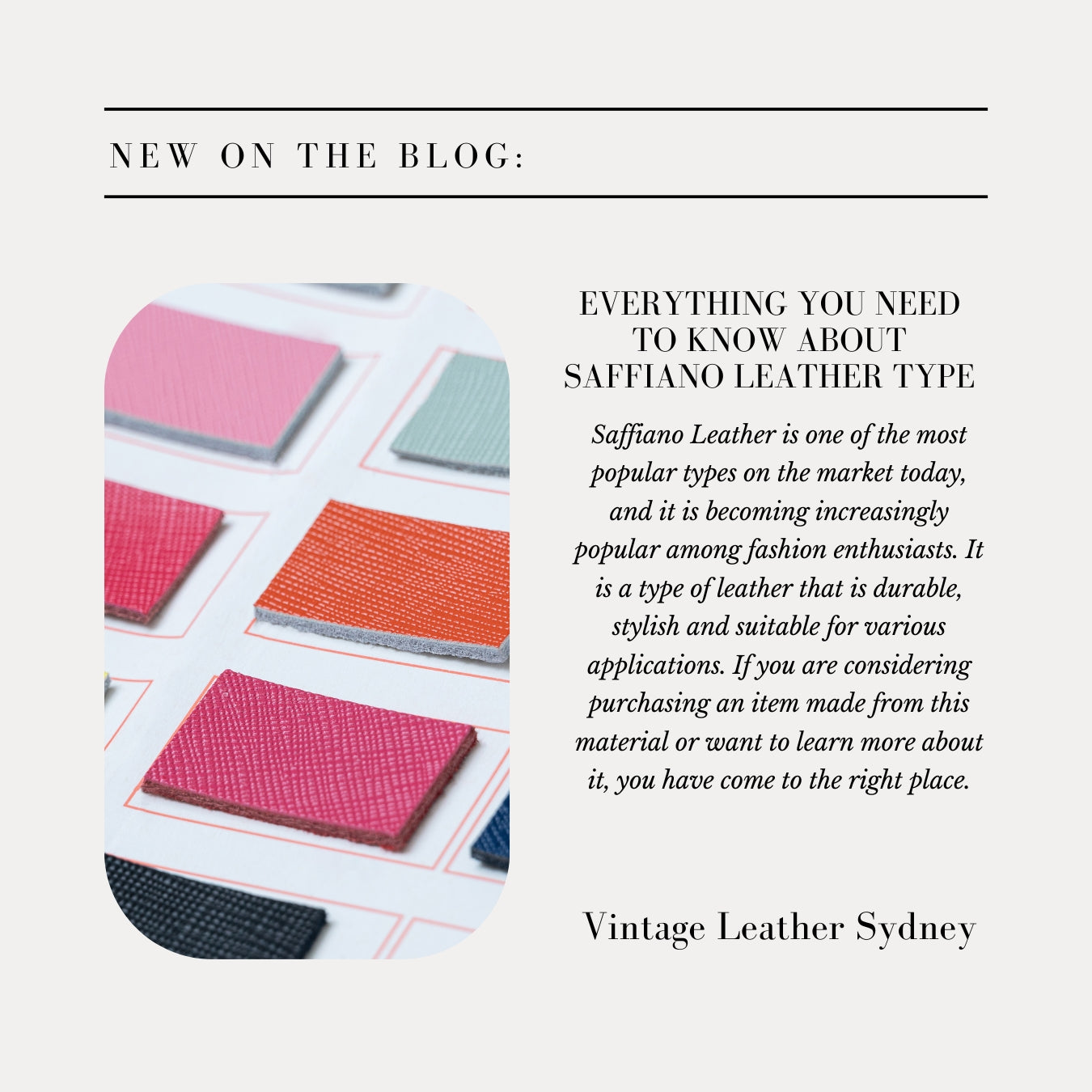
You've seen it on Prada and Michael Kors bags — that fine, criss-cross texture with a subtle sheen. It's Saffiano, and it confuses a lot of shoppers: is it real leather or plastic? The answer is "it depends," because Saffiano isn't really a material at all — it's a finish. Here's what that means, and whether it's right for you.
At Vintage Leather Sydney, we work with natural full-grain leather, so we'll give you the honest comparison too.
What Is Saffiano Leather?
Saffiano is leather stamped with a distinctive cross-hatch pattern and sealed with a wax-based finish. The defining feature isn't the hide underneath — it's that embossed criss-cross texture and the glossy, protective coating over it. A heavy machine presses the pattern into heated leather, then a wax topcoat is applied that gives Saffiano its signature sheen, water resistance and scratch resistance.
This is the key thing most guides get wrong: Saffiano describes the process, not the base material. The cross-hatch can be stamped onto premium calfskin, onto cheaper hides, or onto fully synthetic PVC or PU. As long as it carries that crosshatch finish, it gets called Saffiano. So whether a given Saffiano product is real leather or faux depends entirely on what's underneath the pattern.
The History: Prada, 1913
Saffiano was created by Mario Prada in 1913 — yes, the founder of Prada. Running the family leather-goods shop Fratelli Prada in Milan, he developed a machine-pressed cross-hatch finish on premium calfskin, sealed with wax, designed to be more durable and water-resistant than plain leather. Prada patented it, launched a Saffiano handbag the same year, and the style became a hit with European elites. By 1919 Prada was an official supplier to the Italian Royal Family.
The patent has long since expired, which is why you now see Saffiano everywhere from Michael Kors to budget brands. Prada still uses premium calfskin; many others stamp the same pattern onto cheaper hides or pure synthetics. As one industry guide puts it, these days Saffiano is more about the look than the material or method.

Is Saffiano Leather Real Leather?
It can be either — and this is the most important thing to check before buying. Because Saffiano is a finish, the base can be:
- Genuine Saffiano: real animal hide, traditionally calfskin, as Prada uses, embossed and wax-finished. This is the premium version.
- Faux Saffiano: synthetic PVC or PU with the cross-hatch pressed into the plastic surface. No animal hide at all — cheaper, and common on budget bags.
Both are sold as "Saffiano," so the word alone tells you nothing about whether you're getting real leather. If it matters to you, check the material label for "calfskin" or "genuine leather" versus "PU," "PVC" or "man-made," and weigh the price — genuine calfskin Saffiano from a quality maker won't be cheap.
How Saffiano Leather Is Made
The cross-hatch finish is produced in a short, specific process:
- Preparation: the hide is tanned and made ready. Saffiano usually isn't dyed in the traditional sense, since the wax finish and coating carry the colour, though some makers add colour to the hide first.
- Heating: the leather is warmed to around 70°C so the fibres are flexible enough to take the impression.
- Pressing: a heavy metal plate stamps the cross-hatch pattern into the hot surface — it takes only about 10 to 15 seconds under enormous pressure.
- Finishing: once cooled, a wax-based topcoat is applied, sealing the surface and giving Saffiano its glossy sheen, water resistance and durability.
That wax topcoat is doing most of the work behind Saffiano's reputation — it's what makes the surface tough, wipe-clean and resistant to the scuffs of everyday use.

Pros and Cons of Saffiano Leather
Advantages
- Durable: the wax finish resists everyday scratches, and the busy cross-hatch texture hides the scuffs that do appear.
- Water-resistant: the sealed surface lets light water roll off, though it isn't fully waterproof.
- Low-maintenance: dirt struggles to stick, and it wipes clean with a damp cloth — no regular conditioning needed.
- Holds its shape and colour: the rigid, sealed surface keeps a structured look and resists fading.
Disadvantages
- Expensive when genuine: quality calfskin Saffiano is a premium product, and even cheaper versions need costly machinery to make.
- No patina: the sealed coating means Saffiano can't develop the rich, lived-in patina that natural full-grain leather does. It wears rather than ages.
- Can look synthetic: the glossy, uniform finish reads less natural than untreated leather, which isn't to everyone's taste.
- Coating can degrade: over years, the corners and edges may eventually flake or peel as the finish wears.
- Vulnerable to sharp objects: tough against scuffs, but a sharp edge can still cut through the wax surface.
Saffiano vs Full-Grain Leather
This is the comparison that matters most if you're choosing between a Saffiano piece and natural leather, and it comes down to coated uniformity versus natural character.
Saffiano gives you a structured, glossy, scratch-resistant surface that stays looking consistent and needs almost no care — great if you want a sleek, low-maintenance, structured bag. The trade-off is that it's sealed: it can't breathe or develop a patina, and once the coating starts to wear there's no restoring it.
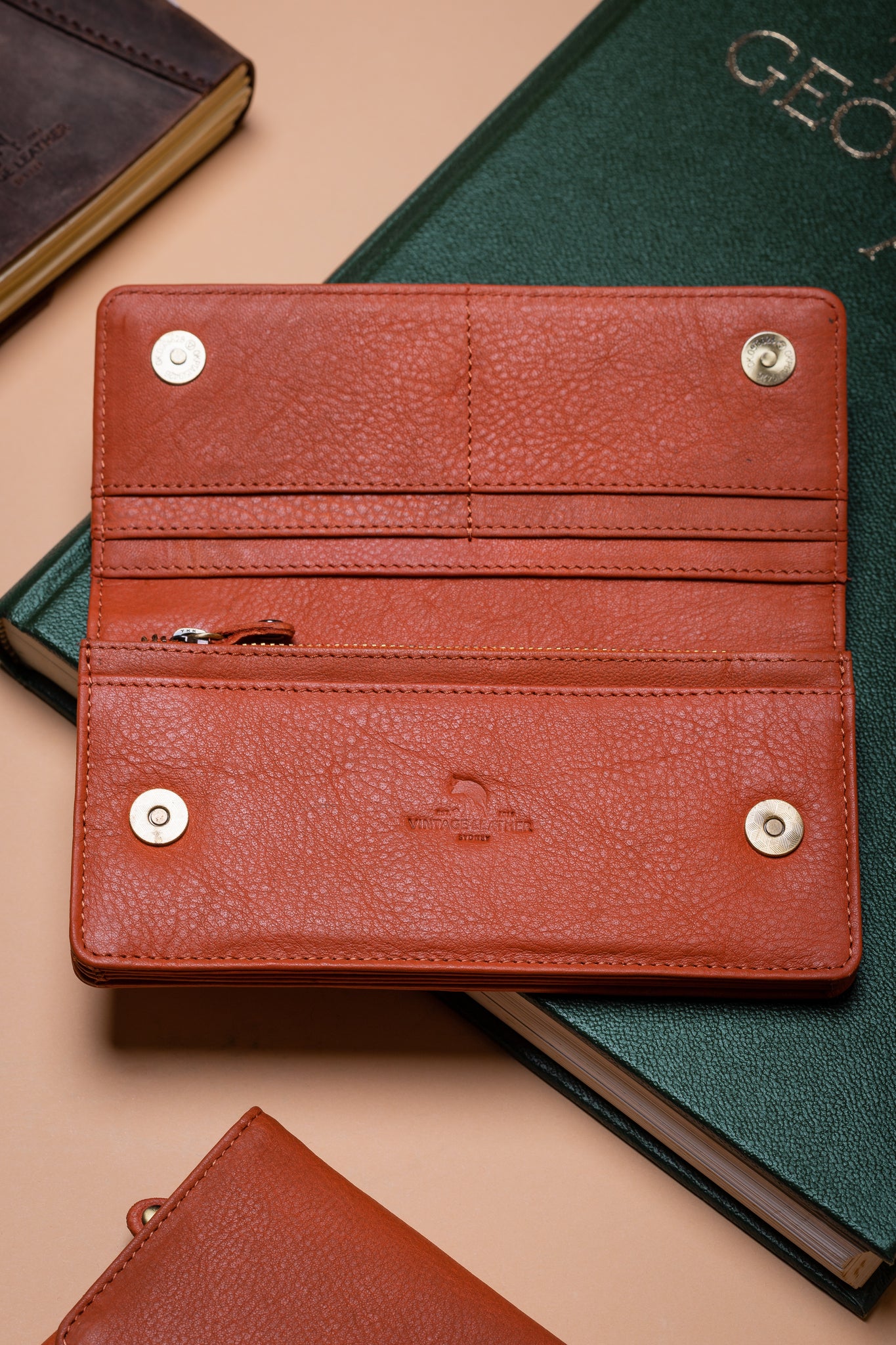
Full-grain leather, which is what we use, keeps the hide's natural grain intact and uncoated. It needs occasional care and shows its first marks more readily, but it breathes, ages into a rich patina, and can last decades — getting better-looking with use rather than slowly wearing out. One isn't simply better than the other; they're different philosophies. Saffiano is built to stay the same, full-grain is built to age beautifully. For a closer look at our side, see our guide on full-grain leather.
Saffiano vs Other Textured Leathers
Saffiano vs Pebbled Leather
Both are textured, but Saffiano's cross-hatch is a machine-pressed, uniform pattern with a wax sheen, while pebbled leather has a softer, more rounded, often more natural-looking bumpy grain. Pebbled tends to feel more supple; Saffiano feels more rigid and structured.
Saffiano vs Patent Leather
Patent leather has a high-gloss, almost mirror-like coating, where Saffiano has a textured surface with a subtler sheen. Saffiano hides scratches better thanks to its pattern; patent shows them more but delivers that bold, shiny statement look.
What Is Saffiano Used For?
Saffiano's rigid, structured, durable surface suits accessories more than clothing. You'll most often see it in handbags, wallets, purses, briefcases, laptop bags, totes, card holders and watch straps. You won't find it in jackets or trousers — it's too stiff to drape, so it lives firmly in the world of structured bags and small leather goods.
How to Care for Saffiano Leather
One of Saffiano's real advantages is how little care it needs:
- Wipe clean: a damp cloth or microfibre towel, wiped gently in a straight motion, handles most dirt. Test any cleaner on a hidden corner first.
- Lift trapped grime: for dirt caught in the cross-hatch grooves, use a damp soft-bristle brush and stroke gently with the grain — don't scrub, or you can dull the sheen.
- Protect occasionally: a Saffiano-safe protector cream helps guard against water and stains. Avoid harsh chemicals, which can damage the finish.
- Store well: stuff the bag to hold its shape and keep it in a dust bag, away from sharp objects.
Is Saffiano Right for You?
Saffiano is a smart choice if you want a structured, low-maintenance bag or wallet that resists scratches and keeps a sleek, consistent look — and you don't mind that it won't age or develop character. Just check whether it's genuine calfskin or a synthetic base before paying a premium.
If what you love about leather is the way it softens, breathes and develops a patina over years of use, natural full-grain is the better fit — and it's what we build our bags, wallets and travel goods from. Different goals, different leather.
Frequently Asked Questions
Is Saffiano leather real leather?
It can be either. Saffiano is a cross-hatch finish, not a material, so it can be stamped onto genuine leather, traditionally calfskin as Prada uses, or onto synthetic PVC or PU. Check the material label and price to know whether a specific Saffiano product is real or faux.
What is Saffiano leather made of?
Traditionally, premium calfskin embossed with a cross-hatch pattern and sealed with a wax finish. Since the original Prada patent expired, Saffiano is also made on cheaper hides or fully synthetic bases, so the material varies by brand and price.
Who invented Saffiano leather?
Mario Prada, the founder of Prada, created and patented Saffiano in 1913 at the family's Fratelli Prada shop in Milan. By 1919 the style was successful enough that Prada became an official supplier to the Italian Royal Family.
Why is Saffiano leather so expensive?
Genuine Saffiano uses premium calfskin and a labour-intensive process requiring specialised heat-pressing machinery, which raises the cost. Brand prestige adds to it — Prada and other luxury houses use it. Synthetic Saffiano is much cheaper, which is why prices vary so widely.
Does Saffiano leather develop a patina?
No. The wax coating seals the surface, so Saffiano can't develop the patina that natural full-grain leather does. It keeps a consistent look over time and then eventually wears, rather than ageing into a richer character.
Does Saffiano leather scratch easily?
It's quite scratch-resistant. The wax finish protects the surface, and the busy cross-hatch pattern hides the light scuffs that do appear. It's vulnerable to sharp objects, though, which can cut through the wax coating.
Is Saffiano leather waterproof?
It's water-resistant but not waterproof. The wax-sealed surface lets light water roll off and resists stains, but it should still be sheltered from heavy rain and not soaked.
What's the difference between Saffiano and full-grain leather?
Saffiano is leather with a machine-pressed cross-hatch pattern and a sealed wax coating, giving a structured, low-maintenance, scratch-resistant surface that doesn't patina. Full-grain keeps the hide's natural uncoated grain, so it breathes, ages into a patina and lasts decades, but needs a little more care.
Is vegan Saffiano real leather?
No. Vegan or faux Saffiano is synthetic — typically PU or PVC with the cross-hatch pressed into the plastic surface — and contains no animal hide. It mimics the Saffiano look at lower cost but won't perform or last like genuine leather.
Final Thoughts
Saffiano is one of the most recognisable looks in leather goods, but the name describes a cross-hatch finish, not a quality or a material. It can be premium calfskin or budget plastic, so the smart move is always to check what's under the pattern. At its best, it's a durable, structured, low-maintenance surface — it simply trades natural character and patina for consistency and easy care.
If you'd rather have leather that ages and improves with you, full-grain is the way to go — and it's what we build with. Free shipping, with Afterpay, Zippay and Klarna available, and every full-price piece backed by a 365-day warranty.